
The Mongoose 2026: One Man, One Mustang, and Nowhere to Run

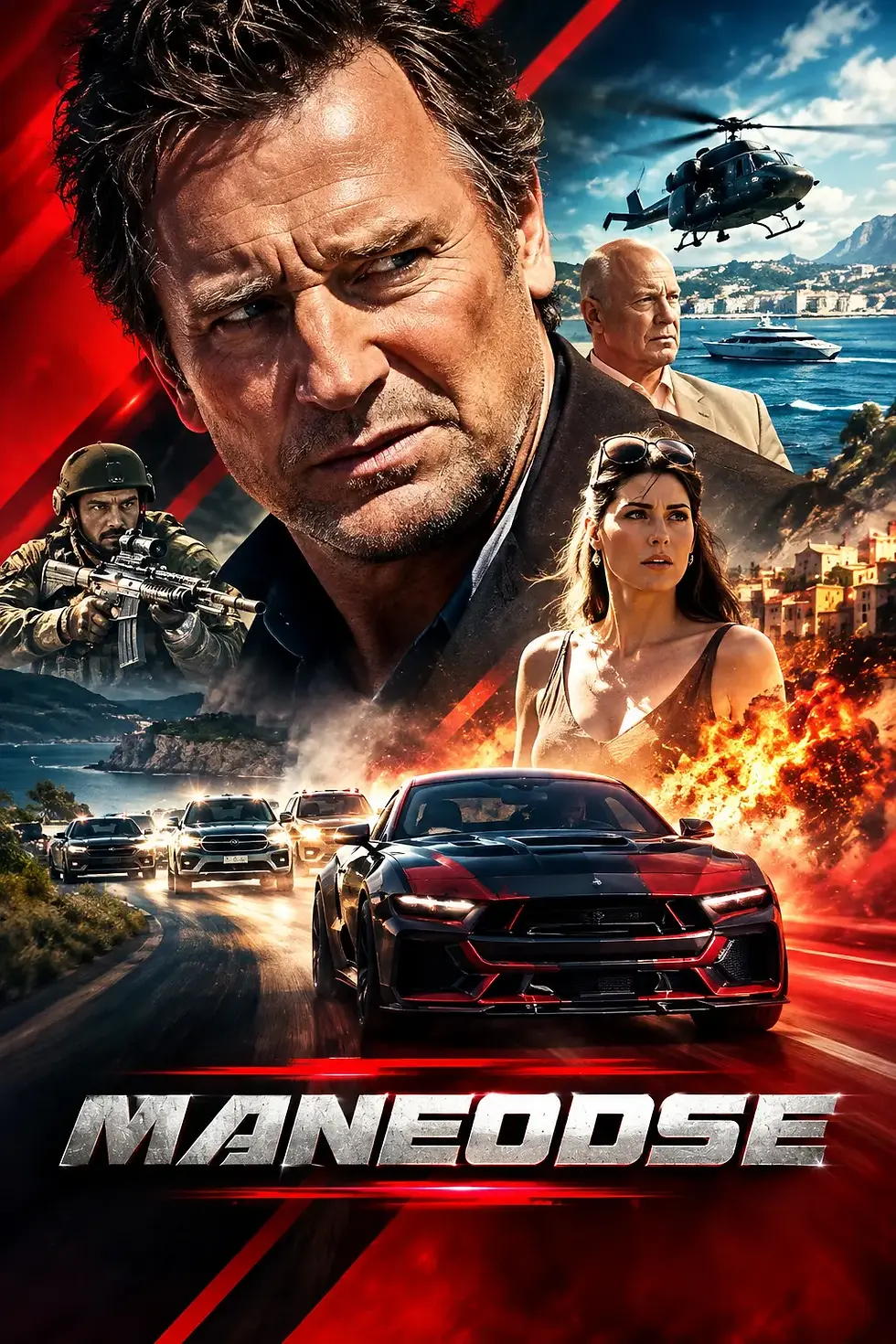
A Mustang With Something To Prove
Three seconds of engine noise. That's enough to tell you what kind of trouble The Mongoose wants to sell. Ryan “Fang” Flanagan, played by Liam Neeson, tears away from a murder scene at extreme speed in a Shelby Super Snake GT350, and the image immediately drags the film toward that old American action fantasy: one man, one road, everybody watching. The setup is deliberately blunt. Fang is a decorated war veteran accused of a crime he says he did not commit, while his former Special Forces comrades and a sympathetic public become part of his escape. I like that simplicity. I also distrust it. The danger with a premise this clean is that the movie can mistake velocity for tension. Mark Vanselow, making his feature directorial debut after years working as Neeson's stuntman, has an unusually personal relationship with this kind of action. That could give the chase muscle. Or it could make the whole thing feel like an expensive extension of a stunt reel.
The Road Is Really the Main Character
Here's the strange part. The more I look at The Mongoose, the less interested I become in the murder mystery and the more interested I am in the road itself. The film was shot in Australia, including locations around Melbourne and regional Victoria, while presenting an unmistakably American chase story. That collision matters. Empty stretches, hard roadside textures, police vehicles and the gleaming Shelby create a visual contradiction: the landscape feels physically Australian, but the fantasy belongs to American television. The cinematography comes from Tom Stern, a veteran whose work can handle both harsh daylight and grim interiors. I want those spaces to feel slightly wrong beneath Fang's tires. Not postcard Australia. Not fake Texas. Something caught between the two. That's where the movie's identity could live.
A Hero Built for the Camera Age
But why does everybody need to watch Fang run? That question sits underneath the entire concept. The chase is reportedly televised, turning a fugitive into a public spectacle while ordinary people follow his escape. That is much more interesting than another “wrong man on the run” thriller. The camera inside the story becomes another police vehicle. Every phone, broadcast and television screen potentially changes Fang from suspect into celebrity. And yet I suspect the film may be tempted by the easiest version of that idea: crowds cheer, Fang becomes a symbol, the authorities look foolish. The sharper version would ask why people so quickly choose a stranger's innocence because his escape looks good on television. That uncomfortable question gives the chase a cultural edge. It also gives Neeson something besides another grim stare behind a steering wheel.
Neeson Doesn't Need to Shout
Still. Liam Neeson is the reason this machine has any weight before it even starts moving. Fang fits the actor's late-career action persona almost too neatly, but there is a useful exhaustion in that image. Neeson can make silence feel like history. Marisa Tomei plays Tara, Fang's former wife, while Ving Rhames plays Tanker and Michael Chiklis plays Major Walter Pope, giving the pursuit a second layer of old military relationships and conflicting loyalties. I am more curious about those relationships than another fistfight. Tara urging Fang to surrender creates a human counterweight to his refusal, according to the film's released promotional material. If that conflict lands, the movie has a pulse. If not, these actors become famous faces orbiting a car.
Chrome, Concrete, and Military Memory
Raw. Uneasy. Potentially very good. The production design, credited to Penny Southgate, has an interesting challenge because the movie needs to make an ordinary road feel like a battlefield without covering everything in military hardware. The strongest visual choice would be restraint: worn buildings, cramped command rooms, roadside businesses, police barriers and the unnerving cleanliness of that Shelby cutting through them. I don't need explosions every five minutes. In fact, I think the film would be smarter without them. A car moving at terrifying speed beside a quiet suburban street can be more disturbing than a helicopter crashing through something. That's the overlooked possibility here. The real violence may come from how normal the world looks while Fang's life collapses inside it.
The Sound of Somebody Running Out of Time
And then the film... needs to know when to shut up. Michael Yezerski handles the score, with Rodrigo Balart credited as editor, and that combination matters because a chase thriller lives or dies in the cut between engine, breath, radio chatter and music. A screaming score can tell me that a scene is exciting. The engine already does that job. I'd rather hear tires bite into pavement, a police radio crackle, Fang breathe through a difficult decision. One early viewer reaction praised the film's use of classic American songs, while also arguing that some of its larger themes are only partly developed. I find that criticism useful. Music can turn a chase into memory. It can also turn it into a commercial.
The Familiar Machine Has One New Gear
That's the catch. The Mongoose clearly belongs to a genre we've seen before: falsely accused hero, relentless pursuit, old comrades, suspicious authorities, one increasingly famous fugitive. Early reactions are mixed rather than unanimous; one Japanese audience entry rated it three stars, while a Letterboxd viewer praised the cast chemistry and song choices but found its themes uneven. Meanwhile, online discussion has focused heavily on the Shelby itself, including questions about the film's Australian production and American visual identity. That conversation tells me something. People aren't only watching Fang. They're watching the machinery around him. Maybe that is the movie's accidental subject: how quickly a human being disappears once the chase becomes content.
The Mongoose Behind the Mongoose
So what's left? A man in a car, a country watching, and a story that may be less interested in innocence than it first appears. The Mongoose 2026 lookmovie arrives with the release date set for October 30, 2026, and the public response is still too early and too small to pretend there is a settled verdict. I keep coming back to the title, though. A mongoose is small, fast and built to survive something larger than itself. Fang has the same problem. He isn't simply escaping police; he's trying to remain a person while strangers turn his suffering into a spectacle. That is the detail the marketing can never quite sell because it isn't about horsepower. It's about the moment a fugitive stops being a man and becomes a story. And that, more than the Mustang, may be the thing chasing him.


Comments